NeoMa Aquarium Academy
Guides
Step-by-step guides on aquarium setup, water chemistry, filtration and livestock.
Necessary cookies keep the site working. With your permission we also load analytics (Google Analytics, Microsoft Clarity) and advertising (Google AdSense). Declining does not limit the guides or your account.
NeoMa Aquarium Academy
Step-by-step guides on aquarium setup, water chemistry, filtration and livestock.
37 guides
South American Cichlids
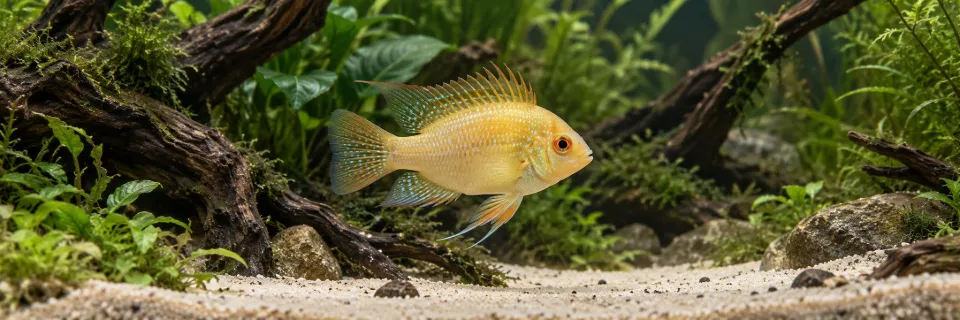
How do you sex Gold rams? Explore colour clues, choosing a compatible pair, fading colour and practical care linked to the main ram guide.
Read →
South American Cichlids
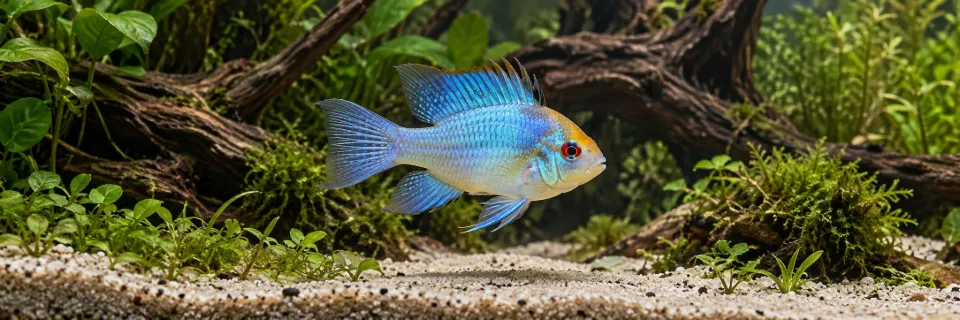
How do you sex Electric Blue rams? Assess less visible colour clues, pair compatibility, condition at purchase and changes in appearance.
Read →
South American Cichlids
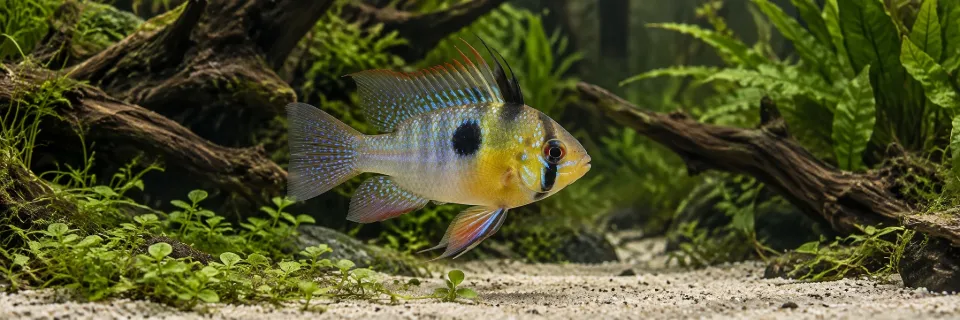
Which fish can live with ram cichlids? Explore tank size, water, colour forms, sexing, pair behaviour and what to check when a ram stops eating.
Read →
Parameter Deviations
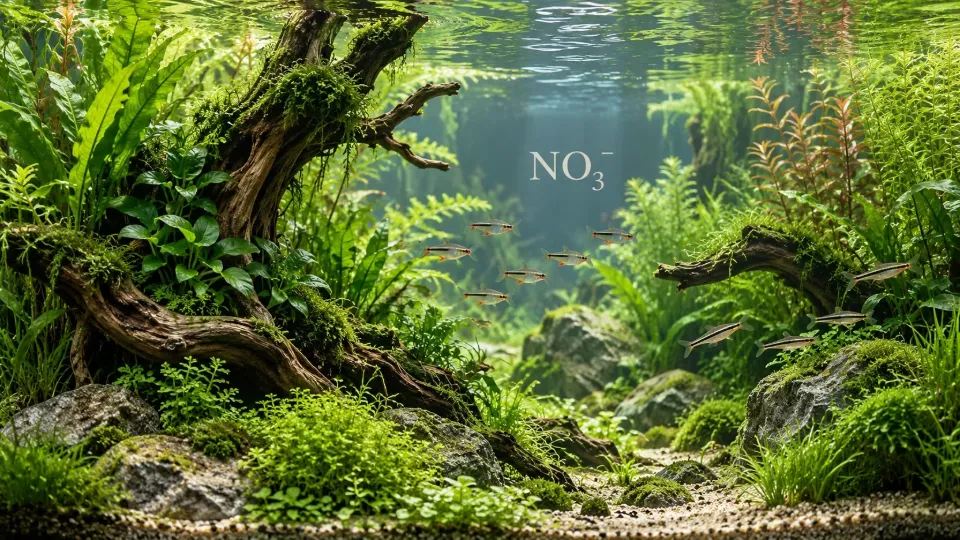
Nitrate is a normal product of the nitrogen cycle, but accumulation can become a problem. Learn how to interpret nitrate readings and manage them in fish and planted aquariums.
Read →
Parameter Deviations
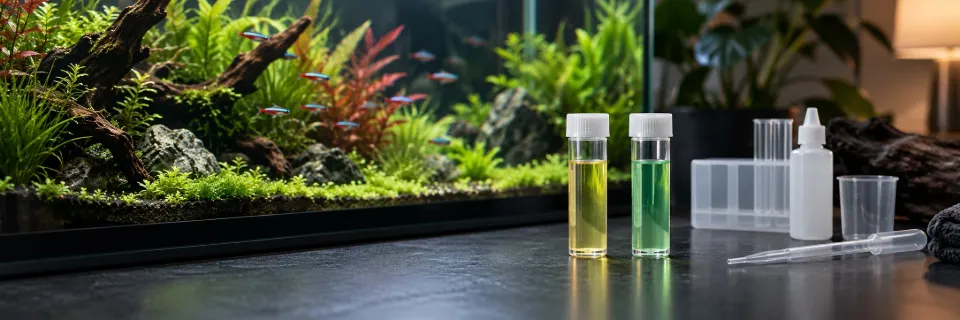
A single ammonia reading does not tell the whole story. Learn the difference between total ammonia and free ammonia, how pH and temperature affect risk, and how to respond when ammonia is detected.
Read →
Parameter Deviations
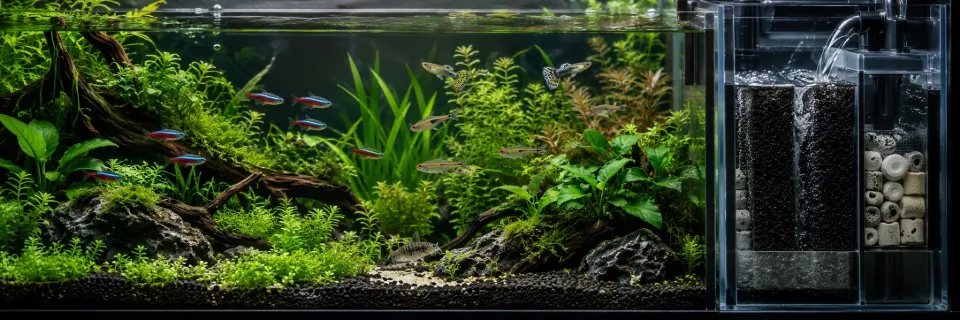
Nitrite can accumulate in new aquariums or when established biological filtration is disrupted. Learn how to interpret the test, reduce exposure and identify the underlying cause.
Read →
Plant Health
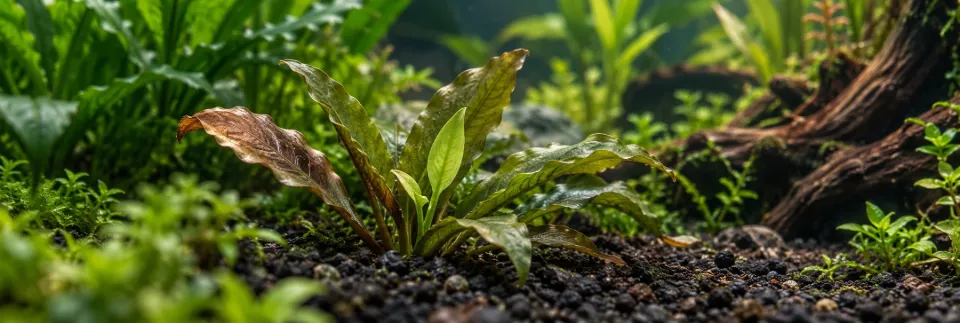
Melting leaves are a symptom, not a fertiliser prescription. Check new growth, planting method and conditions before changing the whole routine.
Read →
Equipment and System Failures
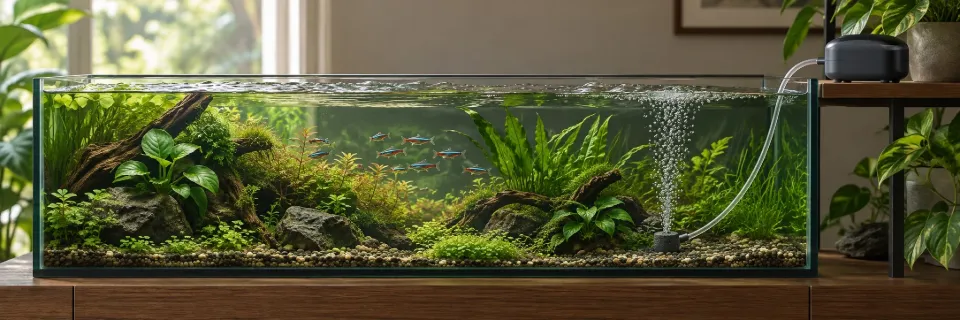
Oxygen is the first priority during an aquarium power outage. Learn what to do while the power is off and how to safely restart filtration, aeration, and heating afterward.
Read →
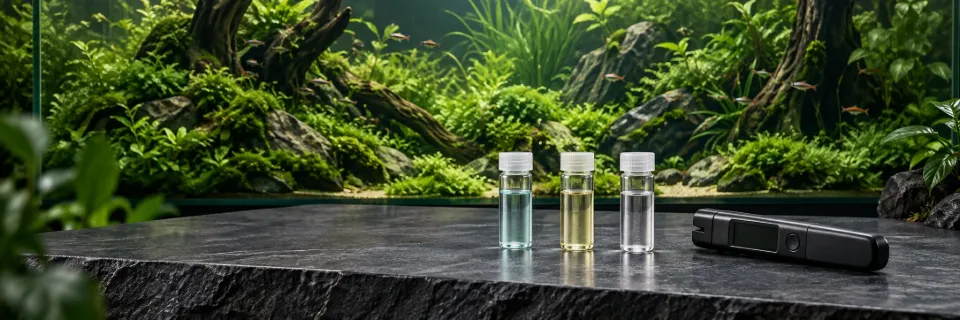
Acid–Base Balance and Buffering
pH, KH and GH are not interchangeable. Compare the tank and replacement water with livestock needs and recent changes before adjusting anything.
Read →
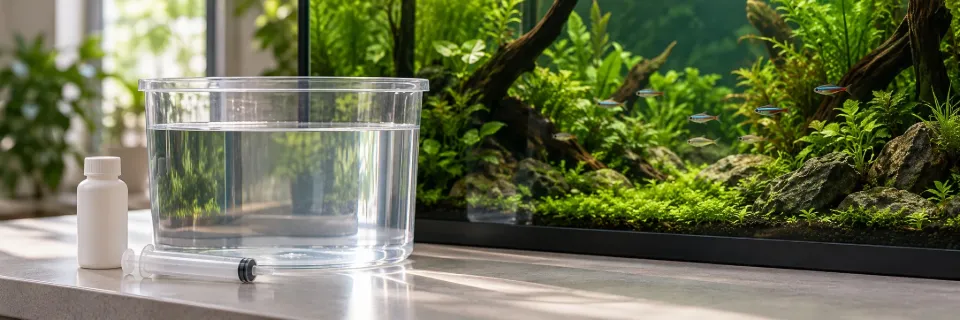
Water Preparation and Calculations
Leaving water overnight is not a complete preparation method for every source. Check disinfectant treatment, product instructions, volume and follow-up.
Read →
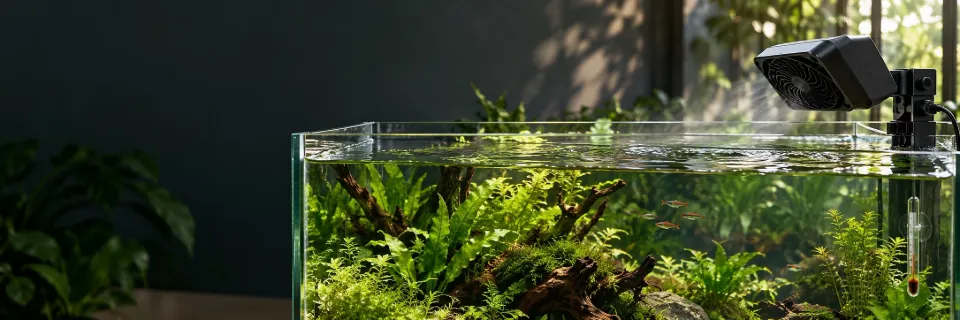
Parameter Deviations
A warm aquarium is not automatically a heater fault. Verify the reading, separate room heat from equipment trouble, and plan controlled cooling with livestock checks.
Read →
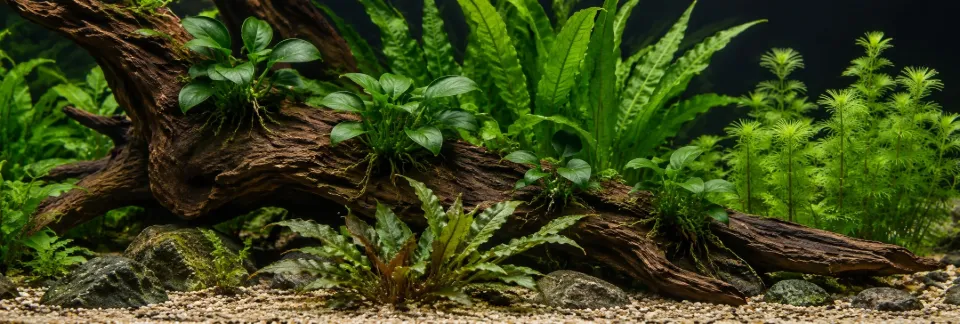
Selection and Cultivation
Match plants to your lighting, CO₂, substrate and maintenance. Understand rhizome, rosette and stem placement instead of relying only on an easy-plant list.
Read →
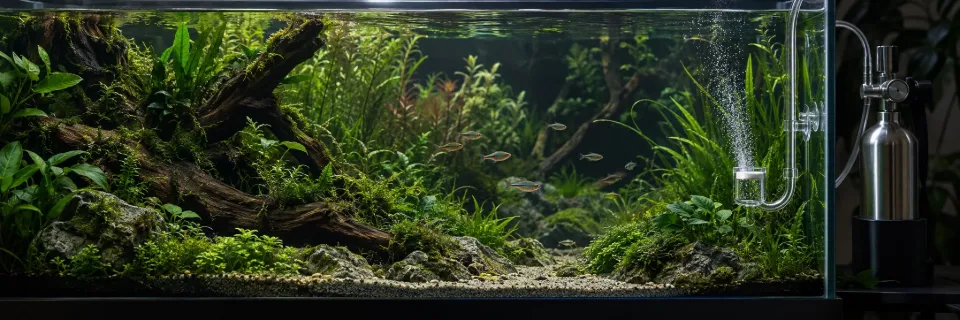
Planted System Technologies
Match the cylinder, regulator, diffuser and controls before starting CO₂. Plan the first run, observation and checks after maintenance.
Read →
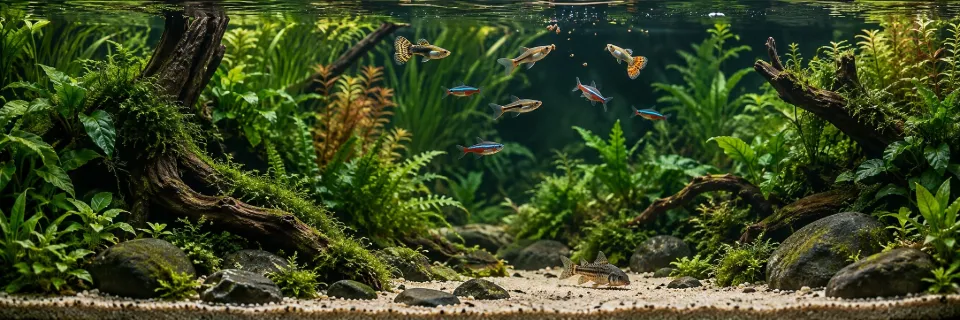
Feeding Strategies
Consider suitable food, access and leftovers before meal frequency. Build a routine for your fish species, life stages and aquarium conditions.
Read →
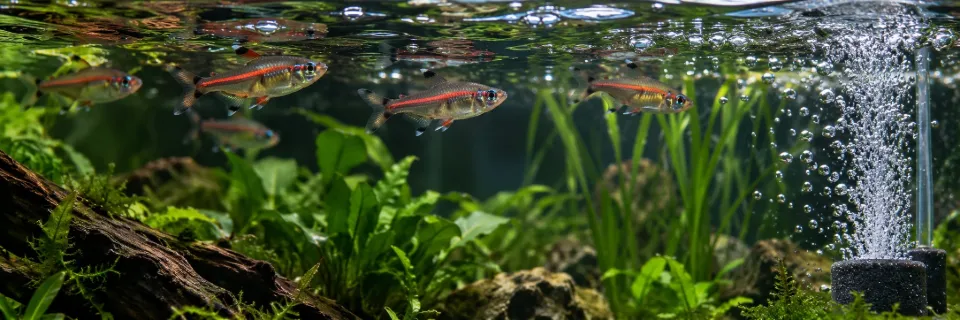
Health Assessment
Surface gathering can have several causes. Learn the first response, the checks that help separate them, and how to follow recovery.
Read →
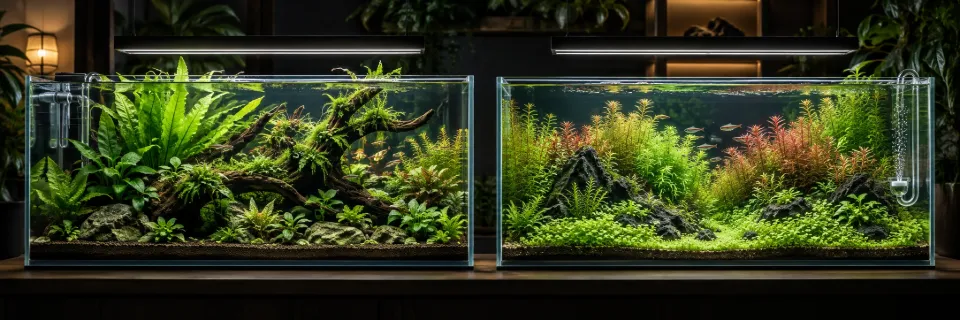
System Approaches
Choose a planted aquarium around your plants, CO₂ plans, budget and maintenance time. Understand what low tech and high tech actually change.
Read →
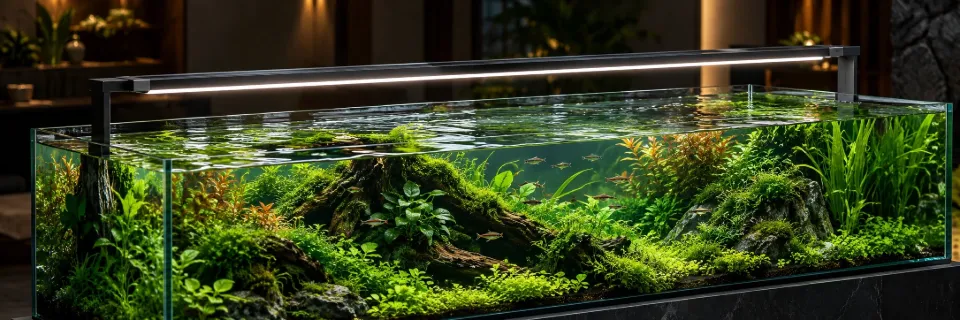
Lighting Technologies
Look beyond wattage when choosing an aquarium light. Match plants, tank dimensions, light distribution and controls to the setup you want.
Read →
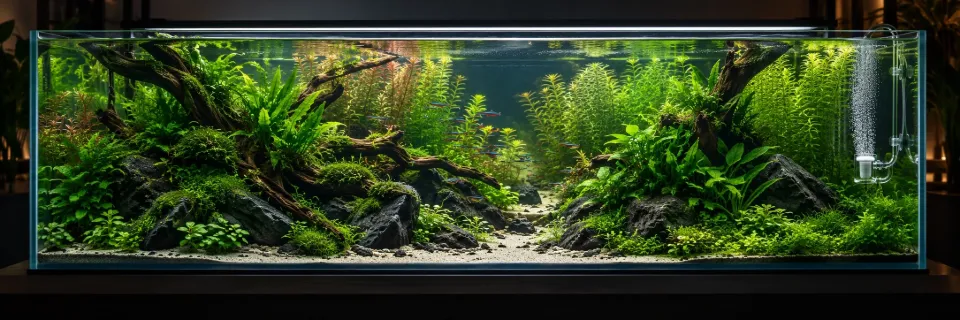
Planted System Technologies
More light did not fix your plants? Review light, CO₂, nutrients and circulation together, and make changes you can actually evaluate.
Read →
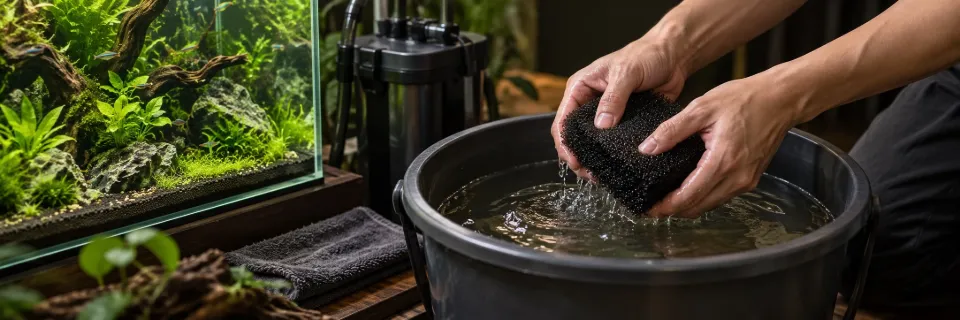
Routine Maintenance
Clean foam, media, impellers and hoses while preserving established filtration. Learn when maintenance is needed and what to check afterwards.
Read →
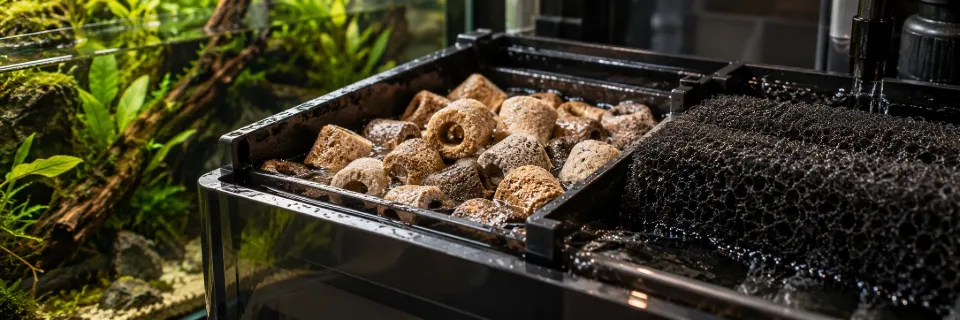
Filtration Mechanisms
Learn what biological filtration does, why new media is not ready immediately and how to preserve established filtration.
Read →
Filter Systems
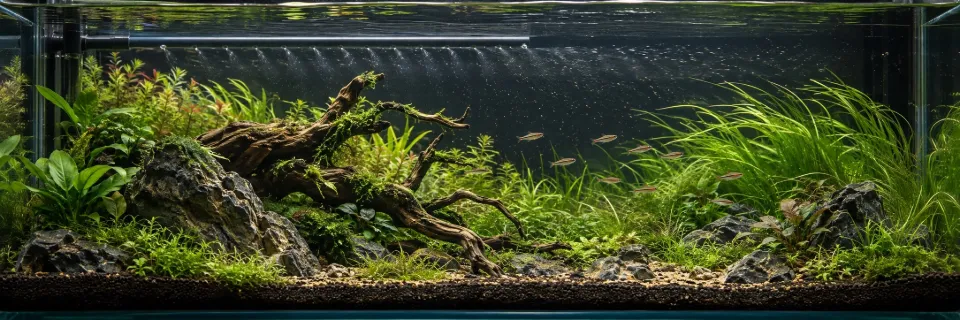
Understand L/h, the difference between filter flow and tank current, and the checks to make when circulation weakens.
Read →
Filter Types and Selection
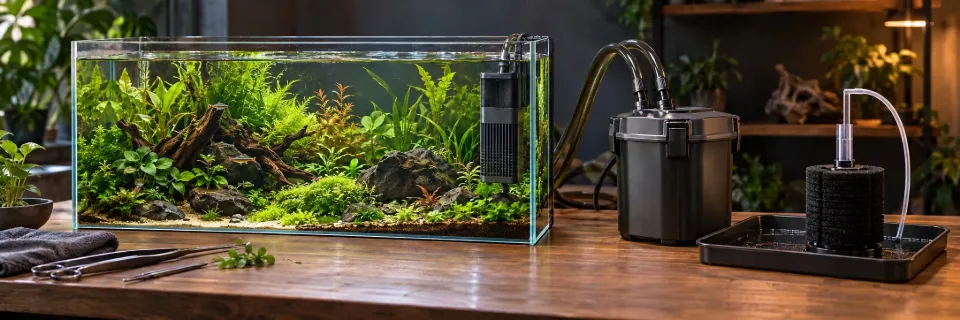
Compare internal, canister, hang-on-back and sponge filters by intake safety, media space, current and maintenance needs.
Read →
Filter Media and Performance
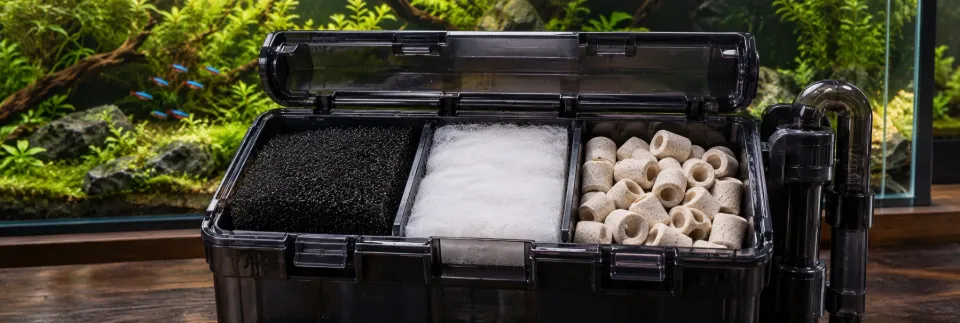
Learn what foam, floss, ceramic media and activated carbon do, how to arrange them and which materials your filter needs.
Read →
Filter Media and Performance
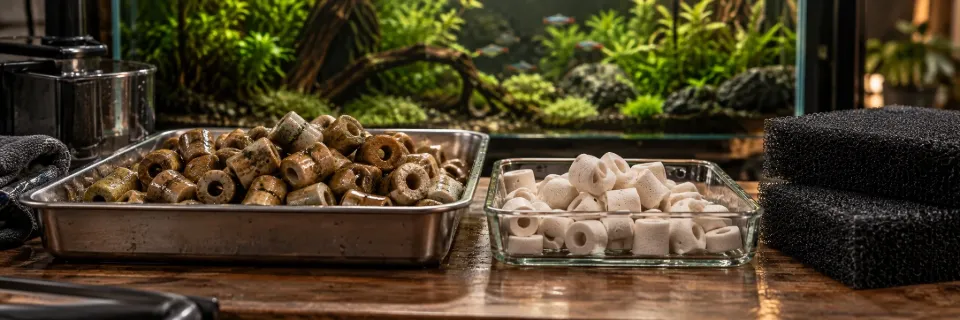
Foam, floss, ceramic media and carbon need different replacement decisions. Check wear, blockage and product instructions rather than colour alone.
Read →
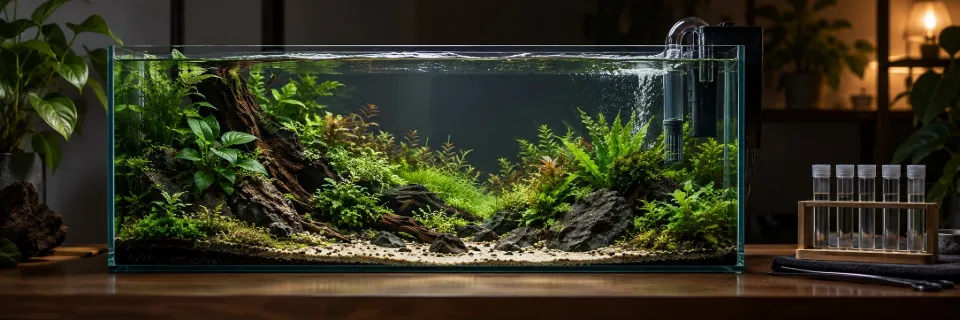
Biological Maturation
Learn how a new aquarium develops biological processing, what tests can show and why waiting a fixed number of days is not enough.
Read →
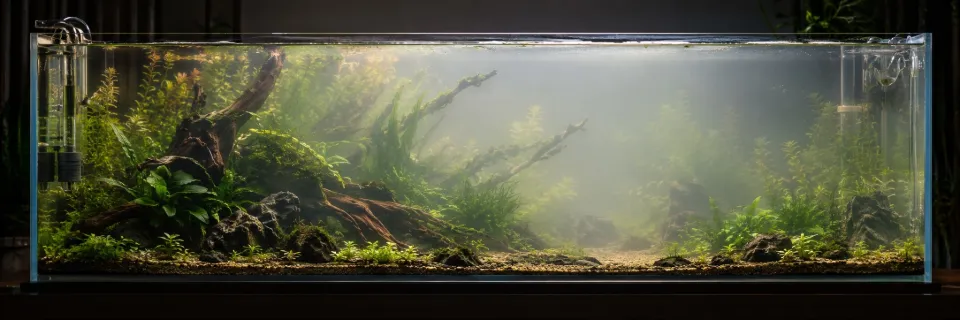
Water and Appearance Problems
White, green and brown water need different checks. Use water tests, animal behaviour and recent changes to choose your first response.
Read →
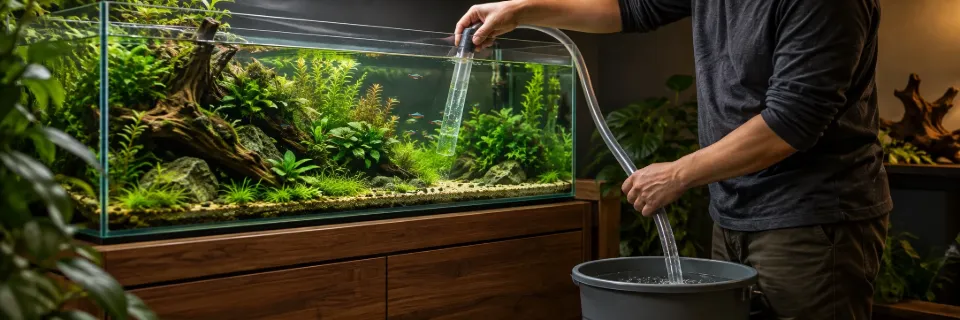
Routine Maintenance
Learn how much aquarium water to change, how often to do it, and how tap water, RO water, substrate cleaning, and evaporation affect your maintenance routine.
Read →
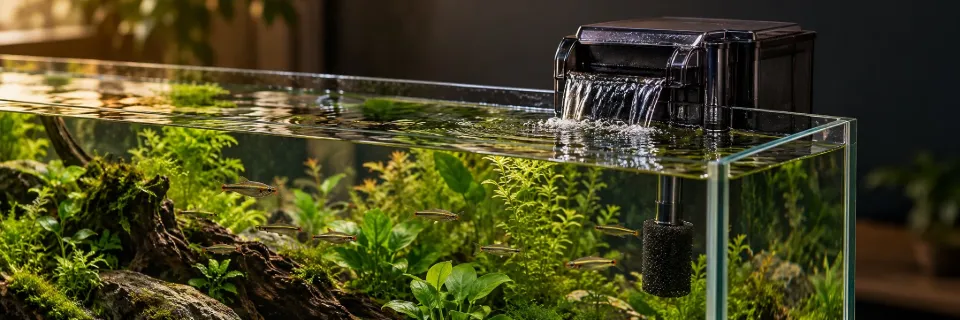
Filter Types and Selection
Is a hang-on-back filter right for your tank? Check rim fit, intake safety, water level, setup and access for maintenance.
Read →
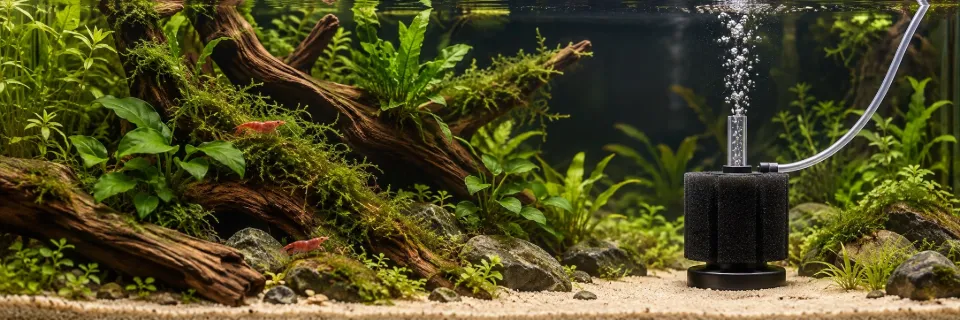
Filter Types and Selection
Explore how air-driven sponge filters work, when they suit shrimp and fry tanks, and what to check for air-pump compatibility, setup and maintenance.
Read →
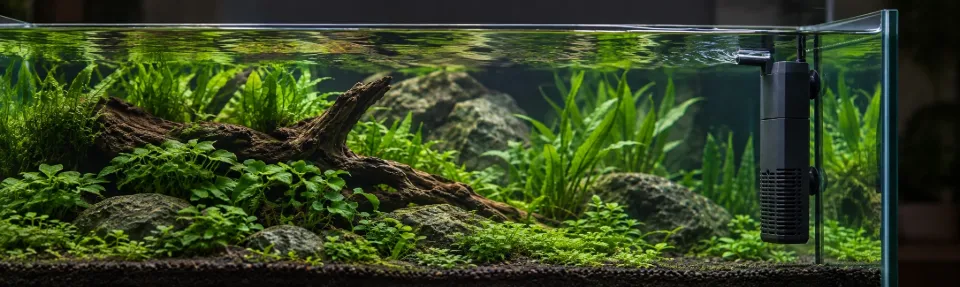
Filter Types and Selection
Learn how internal aquarium filters work, when they are suitable, and how to assess media capacity, flow, shrimp and fry safety, and maintenance.
Read →
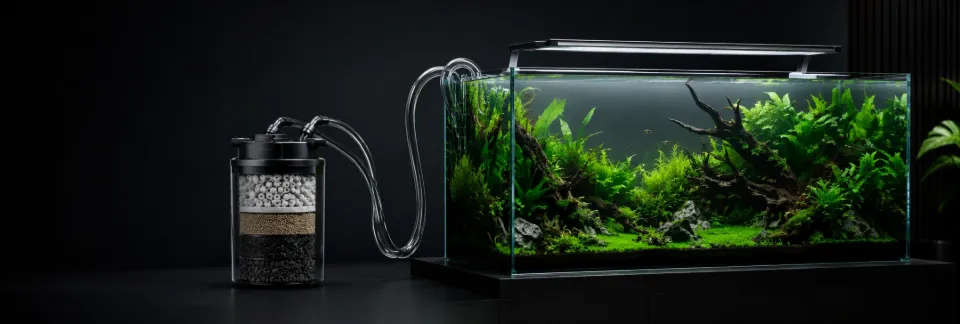
Filter Types and Selection
Explore how external canister filters work, their media capacity and maintenance requirements, and when they are a suitable aquarium choice.
Read →
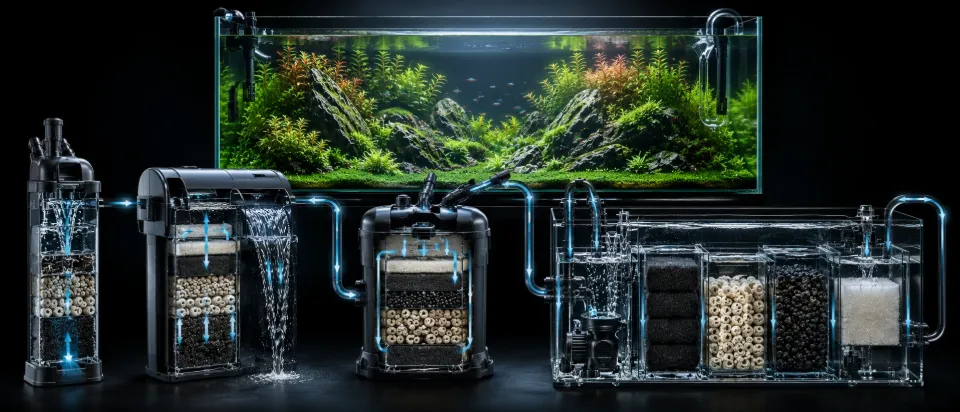
Filtration Mechanisms
Understand mechanical, biological and chemical filtration, why circulation matters, and how to choose a filter for your aquarium.
Read →
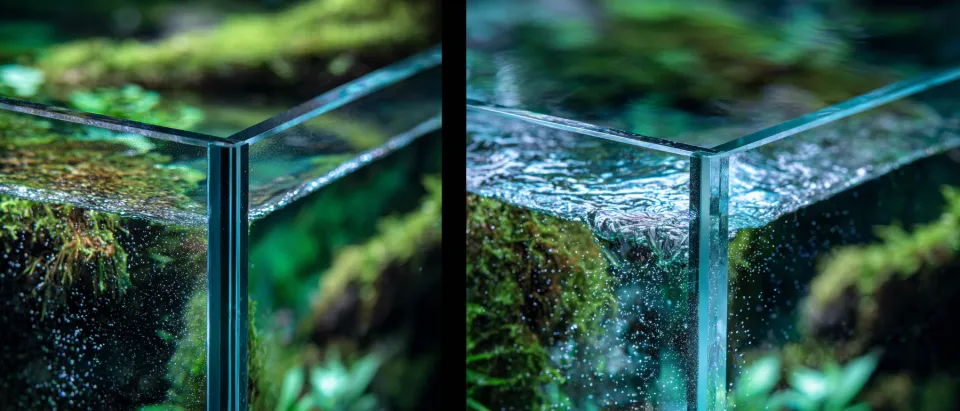
Tank Construction and Safety
Clean silicone seams and well-finished glass edges can indicate good workmanship, but appearance alone cannot prove structural safety. Here is what you can realistically inspect before buying a tank.
Read →
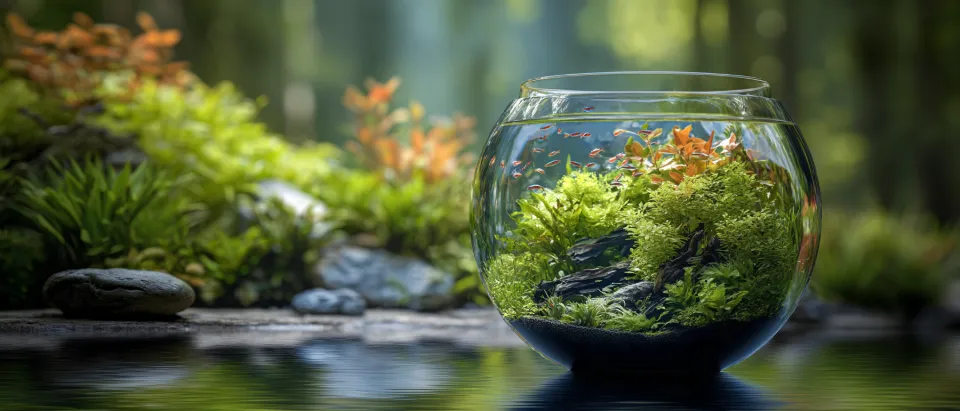
Sizing and Placement
The problem with a fish bowl is not simply that it is small. Water volume, surface area, equipment limitations and usable swimming space can combine to make many traditional bowls poor long-term homes for fish.
Read →
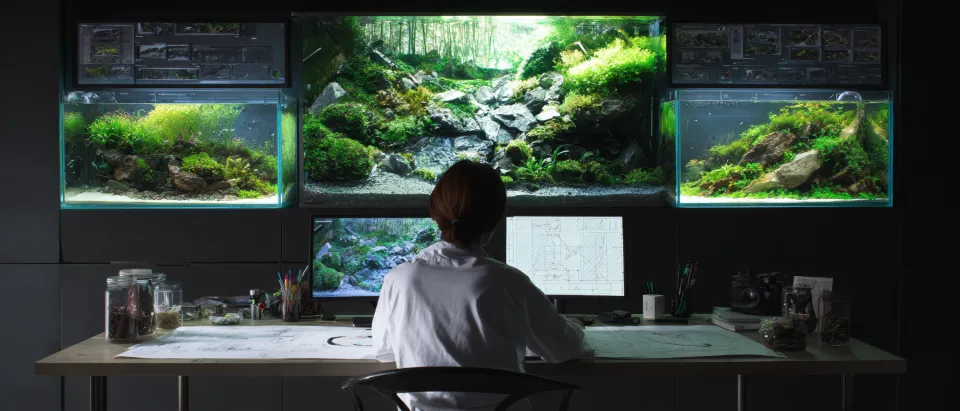
Sizing and Placement
Explore familiar aquascaping tank sizes and how length, depth and height affect layout, equipment selection and maintenance.
Read →
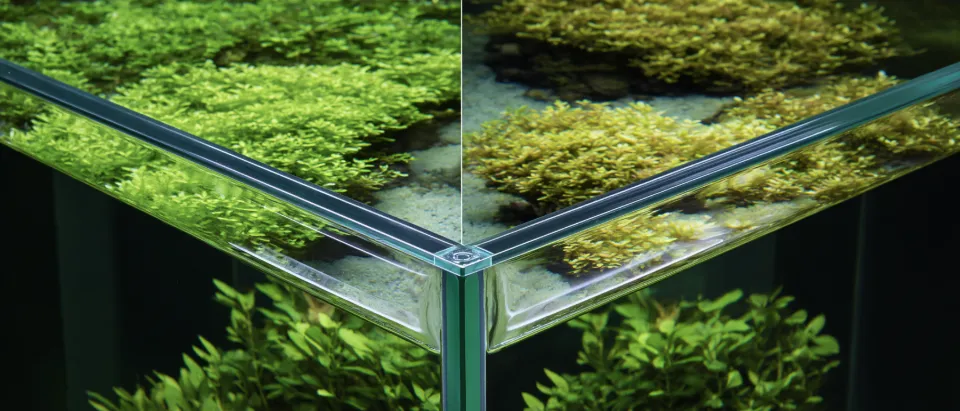
Tank Construction and Safety
Low-iron glass reduces the green tint associated with standard glass, particularly at exposed edges and with light-colored scenes. Here is when that difference is actually worth paying for.
Read →
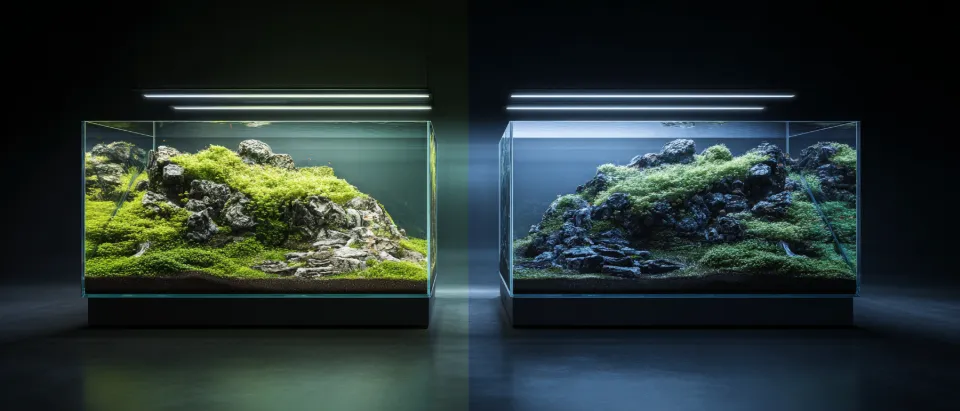
Setup Planning
Plan your first tank around the animals you want to keep, then assess dimensions, water volume, filtration, support and access for maintenance.
Read →