Low Tech vs High Tech: Which Planted Aquarium Fits You?
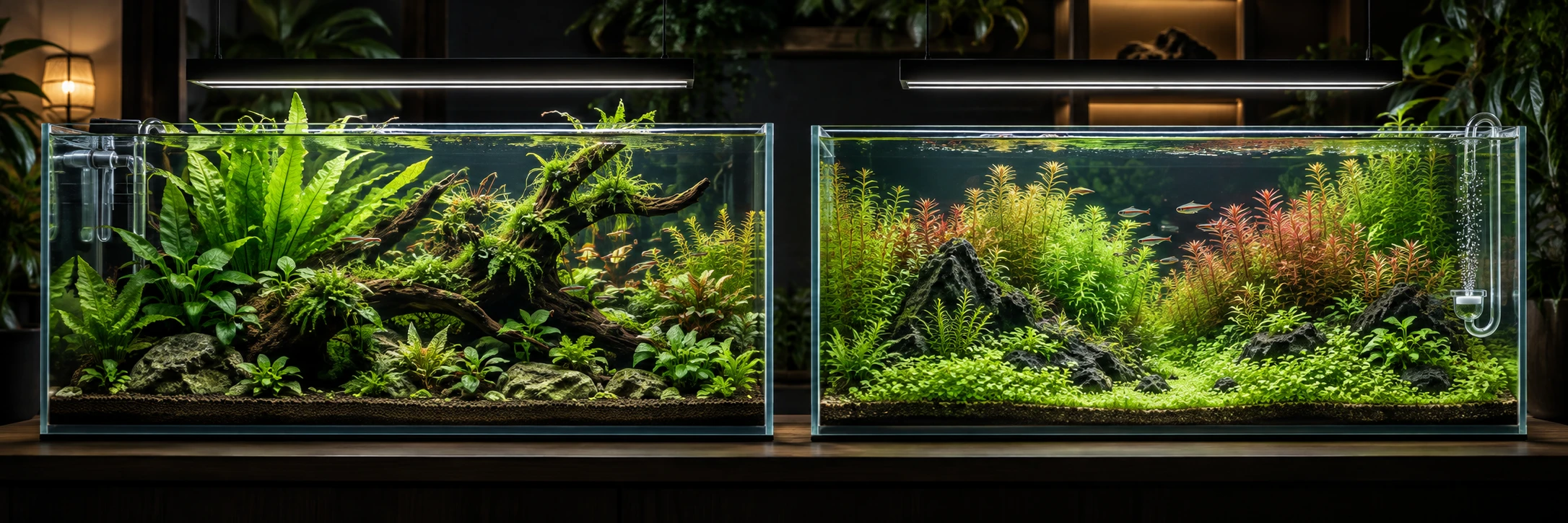
One tank is a calm green scene. Another has colourful stems, a dense carpet and a CO₂ cylinder beside it. Which is better? A photograph cannot settle that. The right setup combines the scene you want with a maintenance routine you can sustain. Low tech and high tech are two common ways hobbyists describe that choice.
Low tech usually means a planted aquarium without injected CO₂, using relatively modest lighting and plants that suit those conditions. High tech generally combines controlled CO₂ injection, adjustable lighting and closer attention to plant nutrition. These are hobby terms rather than official specifications. Plenty of successful tanks sit somewhere between the two.
Low tech still needs care
Skipping the cylinder does not remove the need for filtration, water changes or plant nutrients. The aim is often a slower-growing layout that needs less intervention. Slower growth may mean fewer long pruning sessions, but neglecting a clogged filter or decaying leaves can still upset the tank.
Plant choice matters. Many Anubias and Java fern species can grow without injected CO₂ when their other needs are met. Check the care information for the actual species or cultivar you are buying, rather than relying on a familiar genus name.
A more comfortable starting point is a plant list that fits the conditions you can provide. A demanding carpet plant in a shaded corner may struggle because of its position and requirements. Calling the aquarium low tech does not explain the whole problem.
High tech does not require maximum light
CO₂ injection can help some plants grow faster or develop the form you want. It can also bring more pruning, closer attention to nutrients and additional equipment checks. Cylinder levels, connections, gas distribution and timing become part of the routine. It is worth considering who will handle these tasks before buying the equipment.
A high tech tank can use moderate lighting. Having a cylinder does not mean the fixture must run at full output. Plant requirements, tank depth and the aquarium's response should guide the setting.
Make the decision before filling the shopping basket
Write down three things: the scene you want, the time you can spend maintaining it and the equipment you are willing to monitor. A powerful light bought before those decisions can create work you never intended to take on.
For a slower-growing scene with broad-leaved plants: Low tech may suit you well if the species fit your conditions. Filtration, sensible stocking and regular care still matter.
For particular demanding species or dense, fast growth: Research the actual plants' light and CO₂ requirements. Assess high tech options around that list.
With limited time or budget: Narrowing the plant list may work better than buying the cheapest version of every component while pursuing a difficult target.
If your goal is still taking shape: You can learn with a simpler setup. Plan any later changes around the plants and animals already living in it.
NeoMa's high tech setup video starts with the imagined landscape. The hardscape video shows the design side of that process. Both are in Turkish. They illustrate why knowing the goal behind an equipment choice is more useful than seeing a shopping list alone.
Equal volume does not mean equal needs
Imagine two 60-litre aquariums. One has a few slow-growing plants; the other has a planted foreground and dense, fast-growing stems. Copying the same lighting setting and fertiliser dose into both may be a poor starting point. Plant mass, water chemistry, stocking, shading and maintenance history can all differ.
Someone else's successful settings are useful references. They are not a ready-made prescription for your aquarium. Those smaller details often explain why the same equipment gives different results in two tanks.
Moving from low tech to high tech
Record the current settings and take a baseline photograph first. If you add CO₂ equipment, follow its instructions for installation and secure mounting. Make adjustments while you can stay nearby and watch the animals. Changing the light, fertiliser, plants and gas supply on the same day makes the results much harder to interpret.
Increasing light does not have to be the first target. Healthy new growth, reliable equipment operation and normal animal behaviour are more useful initial checks. If something goes wrong, review circulation, lighting, nutrition and recent changes together before settling on one supposed deficiency.
Common questions
Does a low tech tank need fertiliser?
It may. Plant mass, substrate, source water and nutrients from livestock all influence the need. No cylinder does not mean no need for other nutrients. A dose from another aquarium should not be copied without considering those differences.
Does high tech mean healthier fish?
Not by itself. Suitable species, water quality, oxygen, temperature and maintenance all contribute to animal health. An adjustment made to boost plant growth should be reconsidered if the animals show distress.
Can a low tech tank make an attractive aquascape?
Yes. Design depends on more than growth speed. Stone, wood, open space and suitable plants can create a strong composition. If you want to reproduce a particular photograph, investigate that aquarium's species and conditions as well.
Choose a routine you can maintain
Before deciding what to call the tank, work regular observation and care into your week. Keep dates for lighting changes, pruning and fertiliser adjustments in your NeoMa tank records. A few weeks later, you can see what actually changed instead of relying on a vague memory that things used to look better. A setup becomes easier to manage when its routine is something you can follow consistently.
Sources
Follow this in your own aquarium
NeoMa Aquatics is an aquarium management application for keeping tank profiles and maintenance history together. Use the setup profile for lighting and CO₂ information, and journal records for the changes you make. Open your tanks and records.
For another part of the setup, see Choosing an Aquarium.