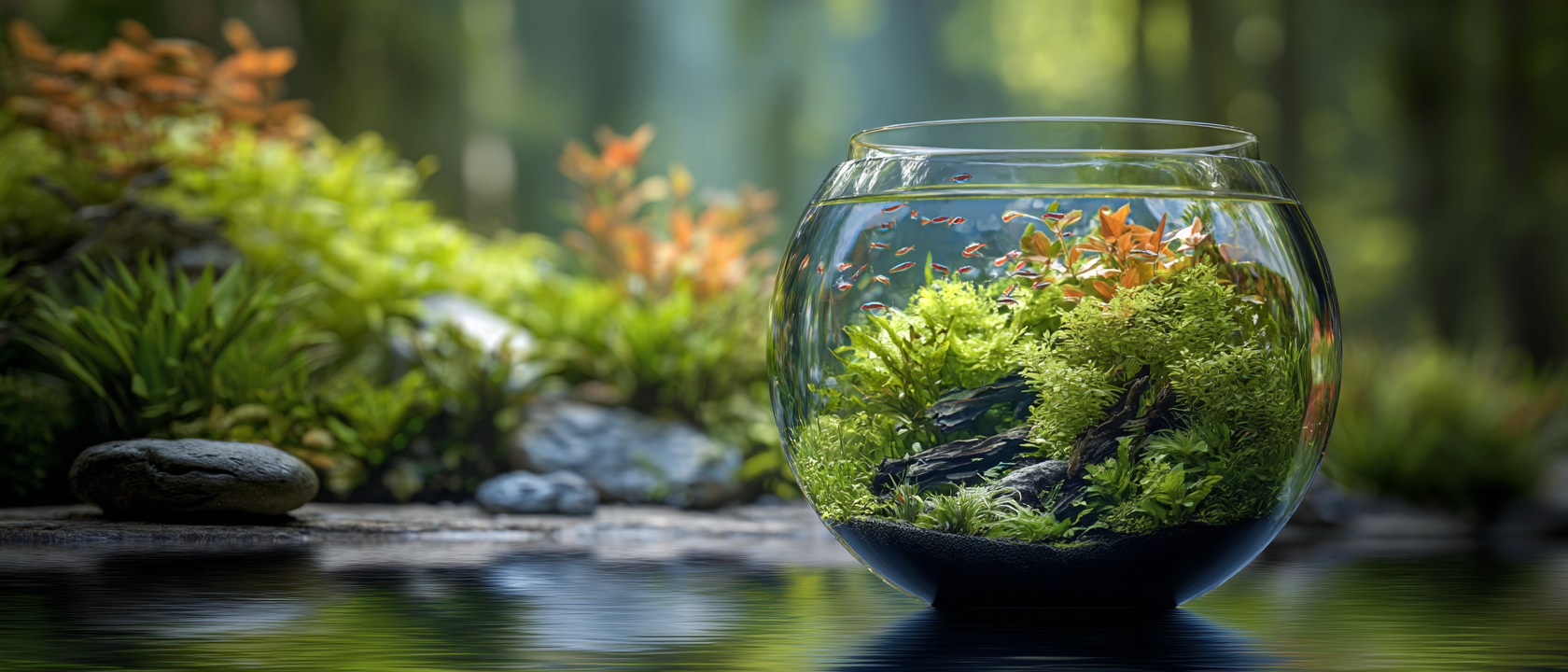
A fish in a small bowl may be the first aquarium image that comes to mind. It takes up little space and looks simple to set up. Meeting the animal’s needs also involves filtration, temperature control, swimming room and regular care. Consider how you would provide those things, rather than only whether the bowl holds water.
Filtration limitations
A bowl's shape and size can make it difficult to fit an appropriate filter. Without a suitable method of managing waste and maintaining water quality, feeding and stocking can quickly place demands on the system. The issue is the complete setup, not the shape alone.
Small water volume
With the same input of waste, a smaller water volume produces a larger change in concentration. Limited water volume can also offer less tolerance for some environmental changes. It should not be assumed to make the aquarium easier to care for.
Water surface and gas exchange
Gas exchange takes place at the air–water interface. The available surface depends on the bowl's shape and how far it is filled. A narrow opening can limit the exposed surface; water movement and other conditions also affect gas exchange.
Equipment placement
Fitting and safely positioning a heater, filter or other equipment may be awkward. This can restrict options for controlling temperature, circulation and maintenance. Equipment requirements must follow the animals' needs.
Can anything live in a bowl?
Plants and some invertebrates may be maintained in carefully designed setups. That does not make every bowl suitable for every animal, nor justify placing fish in a container based only on its decorative appeal.
Following this in your own tank
For a first fish setup, a tank with space for equipment and maintenance can be a more manageable starting point. If you already own a bowl, assess its limits before adding animals; a plant-only or decorative use is another option. Survival for a while does not establish that an animal’s needs are being met.