

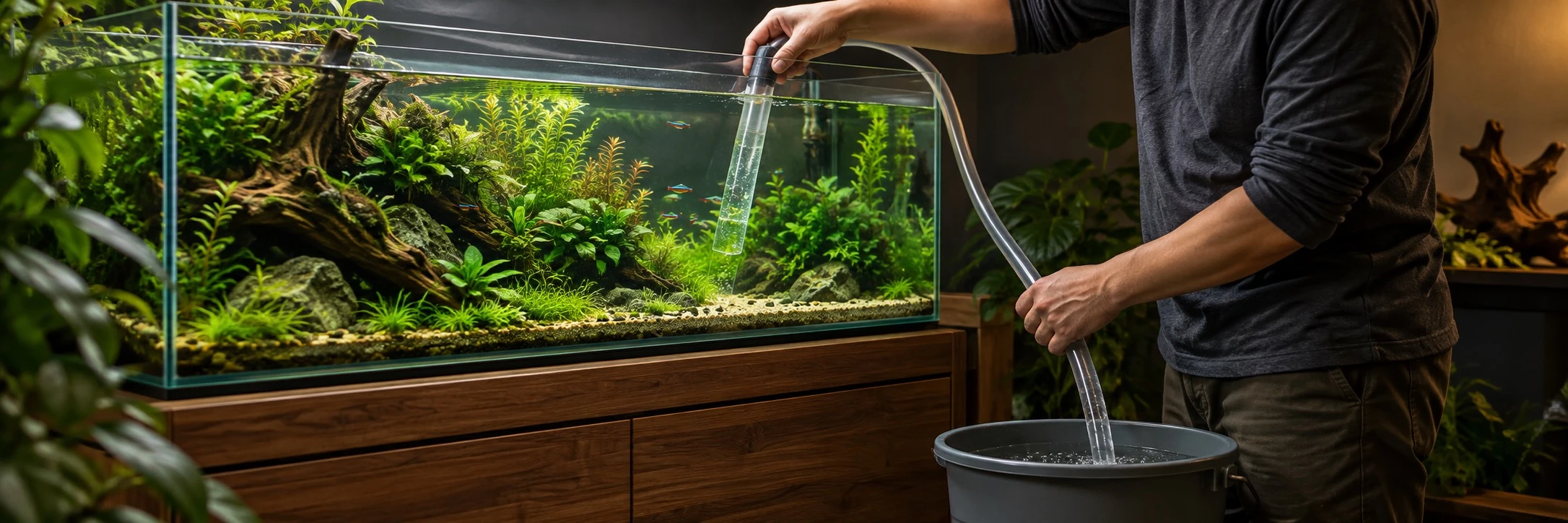
The water level has dropped, so you top it up. Is the maintenance done? Topping up and changing water do different jobs. Evaporation leaves many dissolved substances behind; a water change removes some of that water and its contents. The amount to replace makes more sense when you consider your tank’s load, source water and test results together.
How much and how often?
A friend may change the same amount every week with good results. Your tank may need a different plan: stocking, feeding, plants and source water all matter. Start with a manageable routine and adjust it using observations before and after changes. Clear water alone does not tell you how much maintenance is needed.
Prepare replacement water first
Understand your source. For tap water, use an appropriate conditioner for chlorine or chloramine according to instructions; standing water is not a universal substitute. Check temperature and, for sensitive systems, relevant chemistry. RO water may need suitable remineralisation. TDS alone does not identify the minerals present, so matching it does not prove that GH and KH requirements are met.
Protect equipment during the change
Follow safe shutdown procedures for the heater and filter. Respect heater cooling and restart instructions instead of exposing hot glass abruptly. Check whether the filter intake will emerge as water falls. Use aquarium-only clean containers and tubing. Start a siphon without mouth suction. With shrimp or fry, protect and watch the intake rather than assuming animals will stay away.
Vacuuming does not mean digging up everything
Remove appropriate visible waste without unnecessarily disturbing plant roots, active soil or layered substrates. The substrate and layout affect cleaning technique. Extensive disturbance of the whole tank is not required at every session. Watch for unexpected odour, dead animals or heavy decay. Investigate these rather than treating them as ordinary maintenance. A water change does not automatically fix the source of a problem.
Checks after refilling
Refill without disrupting the layout. Restart equipment only at an appropriate water level and according to its instructions. Observe output, temperature, leaks and animals. Switching a filter on is not proof of proper circulation. Check relevant measurements afterwards and as needed later. Replacement water that differs greatly can cause problems for sensitive livestock; appearance is not a compatibility test.
Example: only topping up evaporation
If you top up weekly but never remove water, a full-looking tank does not prove maintenance is complete. Source minerals and accumulation still matter. Record top-ups separately from water changes, noting water used, volume added and water actually removed.
Frequently asked questions
Should I empty the whole tank?
Routine maintenance is not rebuilding the tank. Plan volume around need and replacement-water compatibility.
How should I choose top-up water?
Consider source water and mineral requirements rather than water level alone. For the basic jobs of filtration, see our Aquarium Filter Guide.
What should you record in NeoMa?
Record approximate removed and added volumes, source and preparation. Separate top-ups from changes. Include before-and-after temperature and relevant tests; GH and KH changes may matter in sensitive systems.
How can you tell it helped?
Check equipment, temperature, the intended reduction and animal behaviour. Unexpected deterioration calls for inspecting replacement-water preparation and differences. Adjust the routine around trends rather than one session.
Following this in your own tank
Build a water-change routine you can sustain. Notes on the amount removed, water preparation and the animals afterwards can help you adjust the interval to your tank. If conditions worsen urgently, reassess rather than waiting for the usual maintenance day.