

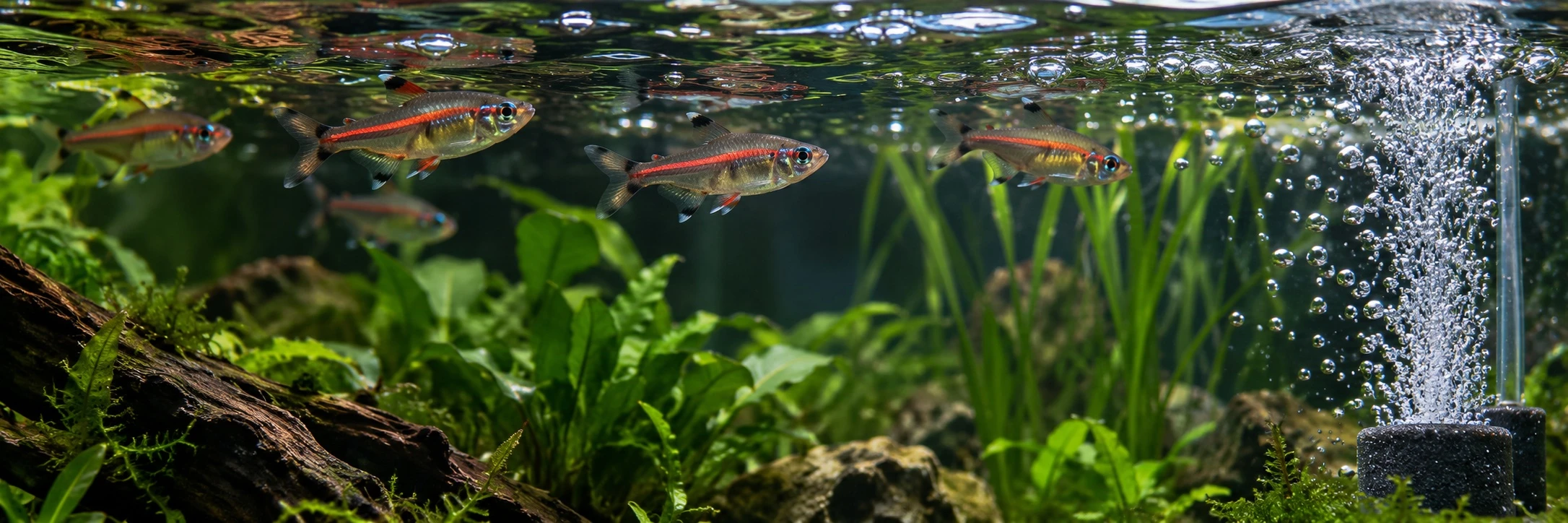
Fish Gasping at the Surface: What to Check First
Yesterday the fish were moving around normally. Today several are crowding the surface or filter outlet. Low oxygen is worth checking, but this behaviour is not a diagnosis. Water quality, CO₂ and problems affecting the gills can create a similar picture.
This guide covers freshwater aquariums. If several fish show clear breathing distress, increase surface movement and aeration first; temporarily stop injected CO₂ if you use it. Do not leave struggling fish waiting while you investigate. An air stone can be a useful first response without proving that the underlying problem has been fixed.
Check that the equipment is actually working
Is the filter moving water? Has its output dropped? Is the surface still? A running motor is not enough evidence. Look at the outflow and encourage surface movement without creating a current the livestock cannot comfortably handle. Our filter flow guide explains the difference.
Measure the water temperature with a separate thermometer. The heater setting is not a temperature reading. If the water is unexpectedly warm, check the heater and room conditions. Avoid adding ice or very cold water for a sudden correction. A suitable temperature depends on the species in the tank.
The timing helps narrow the checks
Start with four details: when it began, how many animals are affected, what changed beforehand, and whether you inject CO₂. Trouble immediately after a water change calls for different checks from trouble appearing before dawn.
A recent CO₂ adjustment, timer change or diffuser change matters. Do not wait for the drop checker to change colour before responding to distressed fish. A long-term indicator may lag behind changes; its colour alone does not establish livestock safety. Once the immediate situation is stable, review light, CO₂ and nutrient balance.
If the pattern appears on warm days or early in the morning, review aeration and overnight surface movement. If it follows new livestock, heavy feeding, a filter stoppage or maintenance, prioritise water tests. One affected fish still needs attention even when the rest appear comfortable.
Clear water still needs testing
Check ammonia and nitrite alongside pH and temperature. Include dissolved oxygen if you can measure it. Read the list of parameters on your test kit; a multi-parameter kit does not necessarily cover everything you need. Record the unit and read results at the manufacturer’s stated time.
If water quality or contamination is suspected, use a partial water change with properly prepared water whose temperature and chemistry are suitable for the aquarium. Let the condition of the tank and the measurements guide the amount, then test again. Replacement water can also introduce problems: check preparation for chlorine or chloramine and follow the conditioner instructions. See our water change guide for the practical steps.
Panic can make the next decision harder
Do not try to comfort struggling fish with food. A brief feeding pause can reduce incoming waste for healthy adults; fry and animals with specialised feeding needs require separate consideration.
Avoid replacing all filter media or resetting the aquarium. If a blockage is restricting flow, address it while protecting the biological media. Adding random medication, salt and several conditioners together also makes it harder to understand the response. You may end up treating an assumed cause rather than checking the real one.
Follow the recovery, not just the first improvement
Keep the time of the response, readings before and after it, products used and livestock behaviour in one record. Is breathing settling? Are fish spreading through the aquarium again? Do readings rise again at the next check?
Seek a veterinarian experienced with fish or an appropriate aquatic-health service if distress continues, deaths occur, or an individual worsens despite suitable water conditions. Share species, timing, maintenance history and results. Photos and video can help describe the problem; one image cannot settle a diagnosis.
Does every surface visit mean an emergency?
No. Species and the animal’s usual behaviour matter. The warning pattern here is a clear change from normal, persistent surface crowding, rapid breathing, and several animals behaving similarly.
If an air stone helps, does that prove low oxygen? No. Better gas exchange can provide relief in different situations. Record the improvement and continue reviewing water tests and recent changes.
A tank history beats a vague memory
Knowing when something changed is more useful than remembering that it happened “sometime last week”. You can note maintenance, CO₂ adjustments, temperature and observations in your NeoMa tank journal. The aim is to recognise normal behaviour and trace changes, rather than try a different setting every day.
Continue with our nitrogen cycle guide. NeoMa also has a short video about surface movement and oxygen, in Turkish.