Why Aquarium Plants Melt: Look at the New Growth Too
The plants looked great on planting day. Now some leaves are turning translucent, soft or falling apart. Calling it a fertiliser shortage is tempting, but melting is a symptom with several possible causes. Transition, planting mistakes and unsuitable growing conditions deserve separate checks.
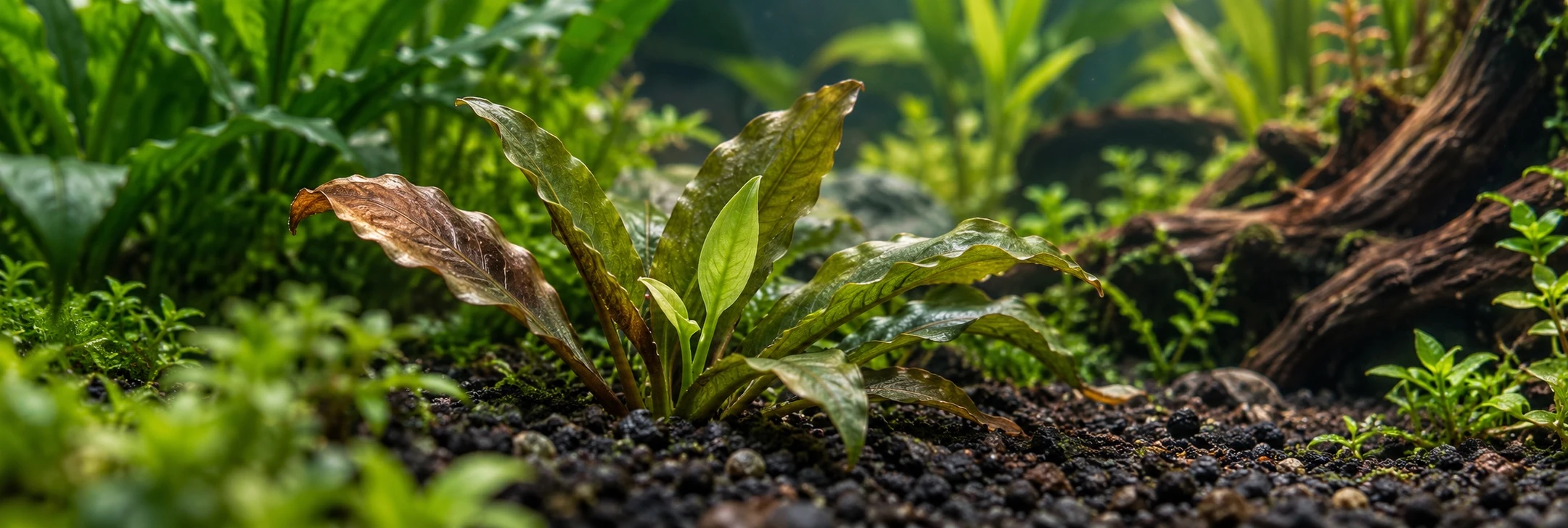
Look at the new growth as well as the damaged leaves. Note which leaves are deteriorating, whether new leaves are appearing at the crown or stem tips, and when the plant was added. This freshwater guide covers new plants and plants declining after a change; it does not identify a nutrient deficiency from one photograph.
Losing old leaves does not necessarily mean losing the plant
Some aquarium plants are produced with their leaves above water. After submersion they may lose part of that foliage while making leaves suited to the new conditions. Production methods vary, though, and transition is not an explanation to apply to every melting plant.
New leaves are encouraging rather than a guarantee. Follow the question “old leaves are deteriorating, but how is the new growth doing?” Losing outer leaves is different from an entire stem becoming soft and breaking apart. New growth that keeps worsening needs investigation rather than unlimited waiting.
Confirm the species and planting method
Find the plant’s name on its label. Rosette plants, stem plants and rhizome plants do not all need the same planting method. Burying the thick horizontal rhizome of plants such as Anubias or Java fern can cause rot; do not confuse it with the finer roots.
Check the visible planting arrangement before repeatedly pulling plants out to inspect roots. Correct a clear mistake according to the species’ requirements. If the plant came in a pot or culture cup, prepare it according to that product’s instructions; growing media can differ. Also establish that the species is suitable for long-term submerged growth.
A damaged leaf is not a dose instruction
Imagine a recently added plant losing outer leaves while new leaves appear at the centre and the other plants continue normally. That is not enough evidence to increase lighting and fertiliser throughout the tank at once.
In a different situation, several established species might decline after a lighting or CO₂ schedule change. Relying only on a “new plant transition” explanation would miss that history. Review light duration and strength, shading, CO₂ use, flow, temperature and fertilisation. Our light, CO₂ and nutrient balance guide helps connect those variables.
If a shortage is suspected, consider the product’s contents and dose, substrate and the plant’s requirements. Avoid identifying a definite missing element from a leaf photo alone. Similar appearances can have different causes, and a mistaken assumption can lead to unnecessary dosing.
Remove decaying material without dismantling the routine
Carefully remove leaves that are completely soft, breaking apart and no longer functional. Do not strip every firm old leaf because its colour is unattractive. Remove settled debris during suitable maintenance without repeatedly disturbing the root area.
Extensive decay can add to the waste load. If livestock also look unwell, this is more than a plant appearance problem: check aeration and water quality, including ammonia and nitrite. Keep the preparation steps in our water change guide.
Do not increase CO₂ without control simply because plants look poor. Livestock safety comes first. A low-tech tank does not necessarily need conversion to injected CO₂; review species choice and conditions using our low-tech and high-tech guide.
How long should you wait?
There is no guaranteed recovery date for every plant. Species, previous conditions and the current growing setup affect the pace. Make waiting an observation plan: photograph the same area, compare new growth and record any setting you change.
If new growth continues, disintegration slows and livestock behave normally, preserving a suitable routine may make sense. If new growth deteriorates too, stems keep softening or other plants decline, revisit planting, species requirements and recent changes. This pattern alone does not establish an infectious disease. Seek experienced help with the species and tank details if needed.
Read the photo alongside the history
In your NeoMa tank journal, note the planting date, species, location, lighting and fertiliser changes, and photos. A similar angle and lighting make later comparisons more useful.
The record should show more than “bad leaf today”: follow the direction of new growth, the amount of decaying material and changes made to the tank together. A consistent routine makes it easier to learn than trying a new setting whenever a leaf looks poor. If lighting suitability is the next question, see our aquarium lighting guide.