

Aquarium Temperature Rising: Room Heat or Heater Trouble?
The heater setting has not changed, yet the thermometer climbs a little higher each day. Would turning the heater down fix it? Start with one distinction: a heater adds heat; it cannot cool an aquarium in a hot room. A faulty heater, warm surroundings and a misleading measurement need separate checks.
This guide concerns freshwater aquariums. Livestock do not all share one comfortable temperature. Instead of applying a single internet “ideal aquarium temperature”, consider the species in your tank and how quickly conditions are changing.
Treat breathing distress as the immediate concern
If several fish gather at the surface or show markedly faster gill movement, support surface movement and aeration while investigating the temperature. Temporarily stop injected CO₂ if used. Do not leave respiratory distress waiting while you choose a cooler or finish a testing checklist.
Warmer water has a lower capacity to hold dissolved oxygen, while animals may need more oxygen. Fast breathing still does not diagnose overheating: ammonia, nitrite, excessive CO₂ and other gill-related problems can look similar. Check water quality and recent events alongside temperature. Persistent distress or deaths calls for experienced aquatic-health support.
A heater setting is not a measurement of the whole tank
Measure the water with a separate thermometer. The number on the heater is a target setting, not proof that the entire aquarium has reached it. An unexpected reading warrants comparison with another suitable thermometer and a check of the measuring device’s instructions.
Avoid relying only on a reading immediately beside the heater. Measure in a suitable position; noticeable differences across the aquarium call for a look at circulation. Judging the water by touch is not a precise measurement. Morning, afternoon and evening records can reveal what changes within one day.
Warm room or heater that will not stop?
When the room is warmer than the tank’s target, the water may warm even if a working thermostat has stopped heating. Turning the setting lower is not a cooling method. Look for direct sunlight, heat retained under a lid and equipment contributions too. Did lighting recently change, or does the rise coincide with the lights being on? Our aquarium lighting guide helps you assess that equipment.
If the independently verified water temperature is above the target and you suspect that the heater continues adding heat, safely disconnect it and consult its own manual. Indicator behaviour varies by model; an illuminated light alone does not establish a fault. Do not repeatedly test a suspect heater in an occupied aquarium.
Do not immediately pull the heater out of the water. Follow its instructions for disconnection and cooling before handling; a hot surface and a rapid change around hot glass present risks. Do not open or attempt to repair a damaged device. Observe the electrical equipment’s safety instructions when working on the aquarium.
Choose cooling around the conditions you actually have
First address environmental heat, for example by shading direct sunlight with a curtain and managing room temperature. Moving a filled aquarium is not an appropriate shortcut. Changes to lids or ventilation also need to account for jumping fish, access by pets and the mounting of electrical equipment.
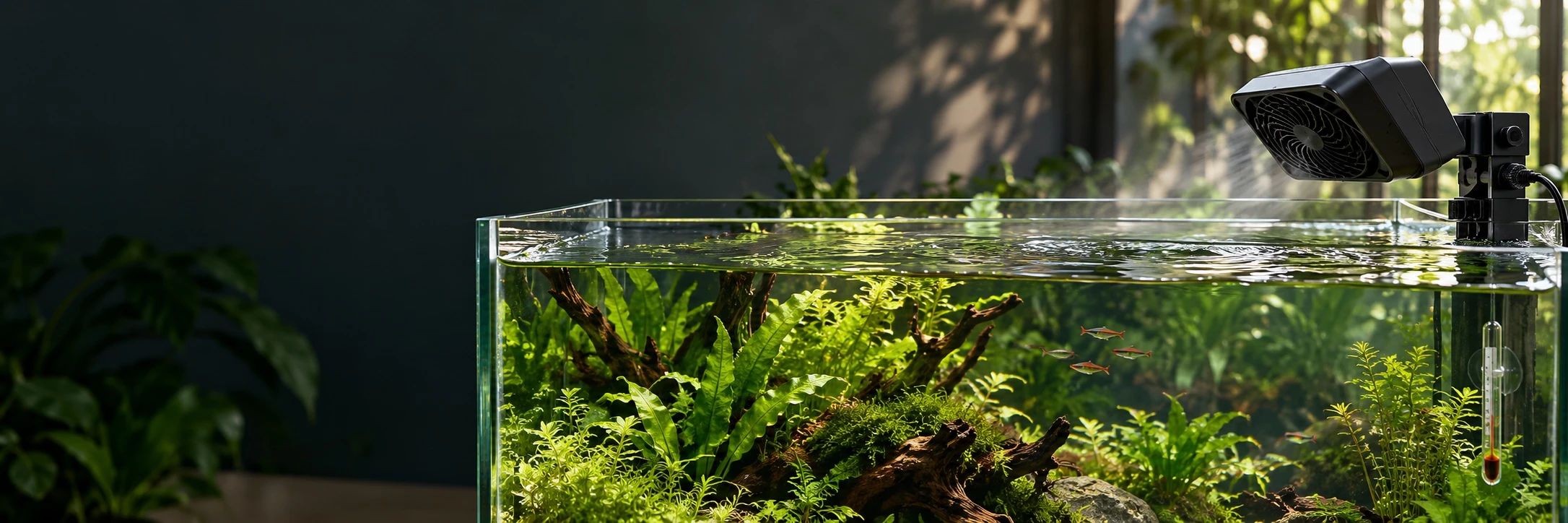
An aquarium cooling fan can help by increasing evaporation at the surface. Do not assume an identical temperature reduction in every setup: room conditions and installation matter. Secure it appropriately, prevent it from falling into the water, and monitor temperature and water level. An air stone supports gas exchange; a cooling fan has a different purpose.
Persistently hot surroundings or sensitive livestock may require more than a fan. When considering an active chiller, assess the tank’s needs, device capacity, flow requirements and maintenance together. Owning a cooling device does not by itself establish a suitable installation.
Avoid chasing a rapid drop with ice or very cold water
The aim is a controlled return to conditions suitable for the animals. It is not simply a lower thermometer reading. Adding ice or unprepared cold tap water directly can introduce abrupt temperature differences and water-preparation problems. A universal number of degrees per hour is not appropriate for every species and situation.
If water quality requires a change, prepare the replacement water and assess its temperature and chemistry against the tank. Our water change guide covers the practical steps. Severe overheating or affected livestock warrants experienced help with the response and its pace; preserving a routine is not a reason to delay urgent action.
Cooling by evaporation needs a water-level check
Evaporation can lower the water level. Check filter intake operation and the immersion level required by the heater. Topping up is different from a water change that removes waste. Assess how top-up water is prepared and how it affects water chemistry; do not automatically add another full dose of minerals each time water evaporates.
The reading is lower; has the aquarium recovered?
Follow-up should cover more than one reassuring measurement. What happens when the room warms again, when the fan stops and on the following day? Does the water remain suitable for the species, and have breathing and normal behaviour recovered? Add ammonia and nitrite checks when the aquarium has experienced significant stress.
In your NeoMa tank journal, note water and room temperatures, the measurement time, lighting/heater/fan operation and the action taken together. That helps you replace “it happens in summer” with a record of when it starts and which arrangement keeps it under control. A stable plan suited to your own aquarium is more sustainable than improvising a different emergency trick on every hot day.