Cherry Shrimp, Blue Dream, Yellow Fire and Bloody Mary are names commonly used for selected color forms of the same species, Neocaridina davidi. Choosing a color may be your first decision, but a lasting colony depends on a mature aquarium, suitable mineral content, safe filtration and food access for juveniles.
Neocaridina Davidi Care: Origin, Water Conditions and Breeding
Cherry shrimp origins and color forms, aquarium setup, water and mineral balance, molting, feeding and juvenile development.
Updated October 31, 2026
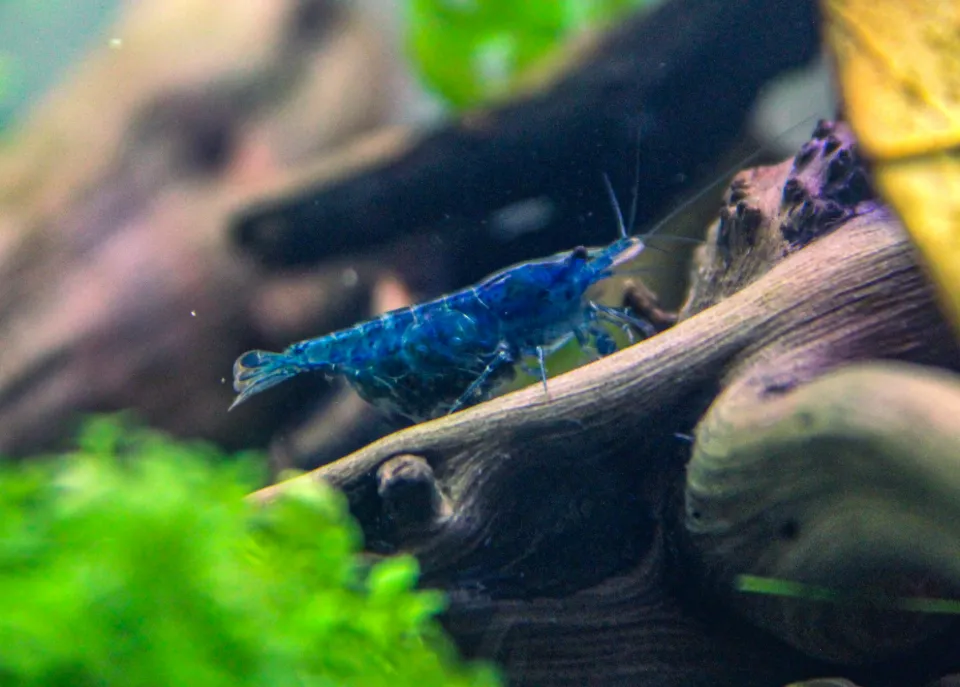
What is Neocaridina, and are all colors one species?
Neocaridina is a genus; not every species in it is N. davidi. This guide covers Neocaridina davidi (Bouvier, 1904), family Atyidae, and aquarium color forms raised under that name. A trade label alone does not establish a scientific identification or guarantee a documented genetic line.
Wild-looking individuals may be translucent, greenish or brownish. Selective breeding has popularized red, blue, yellow and other colors. Mixing colors does not guarantee offspring will retain their parents’ appearance. Keep separate colony records if preserving a particular line is your aim.
Where was it described, and where does it occur naturally?
Bouvier described the species in 1904 as Caridina davidi. A Paris natural history museum record for its type series includes specimens collected by Abbé David at Inkiafou, southern Chensi, now identified as Shaanxi Province, China. This documents scientific description and specimen origin, not the first time humans ever saw the shrimp.
The species has East Asian origins, with records from China and Taiwan. Sources do not fully agree on the boundaries of closely related Neocaridina species or the native versus introduced status of every population. An account limited to “it comes from Taiwan,” or an unqualified origin across all Asia, is therefore inadequate. Aquarium-associated populations have also become established in Europe and elsewhere.
It is recorded from freshwater streams, canals and vegetated margins. Shrimp forage on leaves, stones and plants. In an aquarium, this means providing mature grazing surfaces as well as clean water.
How should you set up the aquarium?
A 40 × 30 × 30 cm species aquarium, approximately 36 liters gross, is one starting example. This is not an experimentally established biological minimum: it is a planning example considering access for maintenance, surface area and rapid changes in small volumes. Decor and fill level reduce actual water volume. Food demand and waste load change as the colony grows.
Use established biological filtration; clear water in a new aquarium does not prove readiness. Mosses, fine-leaved plants, wood and clean leaf surfaces provide feeding areas for young shrimp. Protect the intake with suitable sponge that excludes juveniles, and check for blockage. A sponge filter is one option to consider.
What water conditions do they need?
22–25 °C is NeoMa’s practical starting range for a home colony, not a single experimentally proven optimum for every line. Warmer water does not automatically improve breeding success. See the Neocaridina breeding temperature guide for experimental findings and summer care.
Measure pH, GH and KH together. The general plan is freshwater containing calcium and magnesium, with manageable pH buffering. Do not copy a very soft, weakly buffered Caridina breeding system simply because both animals are shrimp. A coloration study used culture water at pH 7.5 and hardness of 120 mg/L; those describe its conditions, not compulsory targets for all colonies. The study did not test every GH–KH combination to establish an optimum.
Ask about the colony’s previous water and compare it with your measurements. Do not repeatedly add acids or minerals merely to force a healthy colony into an online table. GH, KH and TDS are not interchangeable: different ion mixtures can give the same TDS. Do not use pure RO water as maintenance water without preparing its mineral content. The pH, KH and GH guide explains these distinctions.
Ammonia and nitrite should be undetectable, filtration operational and surface gas exchange adequate. Make controlled water changes with compatible temperature and mineral content, treating chlorine and chloramine appropriately. Most dissolved minerals remain during evaporation; continually adding minerals with top-up water can concentrate the aquarium over time.
What do they eat, and how much should you feed?
Neocaridina are not simply algae-eating cleaners. They are opportunistic omnivores using biofilm, detritus and small organisms. Assess grazing on natural surfaces alongside a suitable complete shrimp food. Watch actual consumption instead of assigning a fixed tablet count per shrimp, and prevent uneaten food from accumulating. More food does not guarantee more healthy juveniles.
Molting and sex identification
Shrimp replace their exoskeleton as they grow. Do not mistake a shed shell for a dead shrimp. Provide shelter for molting individuals. One failed molt should not automatically trigger a diagnosis of calcium deficiency and random mineral dosing: review water, feeding and recent changes together.
Mature females commonly have a fuller abdomen, while males may look slimmer. Color intensity alone does not identify sex. An individual carrying eggs on the swimmerets beneath the abdomen is female. The ovarian area seen behind the head and eggs carried beneath the abdomen represent different stages.
Breeding and juvenile development
N. davidi has direct development: young hatch in freshwater as miniature shrimp. There is no need for the separate saline larval-rearing stage used in Amano shrimp breeding. Development time depends on temperature and conditions; avoid one fixed day count for every female. Look for growing juveniles weeks later, rather than counting egg-bearing females alone.
Successful juveniles need grazing surfaces, protected intakes and food access. Increasing powdered food cannot compensate for a biologically unready aquarium. If juveniles fail to grow, examine filtration, companions and accumulating waste.
Which animals can share the tank?
A shrimp-only setup makes a breeding colony easier to monitor. Even small, peaceful fish may eat newly hatched shrimp. Dense plants can reduce that risk without eliminating it. Do not plan a productive colony alongside predatory fish such as angelfish. Before mixing shrimp species, assess shared water requirements and competition for food.
Are they suitable for beginners?
They can be a useful first shrimp species with a mature aquarium and measured, suitable water. If there are early mass losses, inactivity or unusual behavior, first check temperature, ammonia/nitrite, water changes and possible contaminant exposure. Do not diagnose a disease from one image and medicate at random. Verify a product’s shrimp compatibility from its own label.
Never release shrimp, plants or aquarium water into natural waterways. Environmental tolerance and reproduction can contribute to establishment outside their native range.
Photo license: CC BY-SA 4.0.
Sources and scope
MNHN — Caridina davidi Bouvier, 1904, syntype MNHN-IU-2015-1725: description and specimen origin.
ITIS — Neocaridina davidi: accepted name and synonyms.
Suen & Gillett-Kaufman — Cherry Shrimp, UF/IFAS EENY-751: biology, color forms and feeding.
USGS — Cherry shrimp species profile: development, ecology and introduction risk.
Aquarium dimensions and routine management are practical examples. Field records and experimental water conditions have not been treated as definitive ideal values for every home colony.
This guide was written by NeoMa Aquatics. Original: https://neomaaquatics.com/en/guides/neocaridina-davidi-care